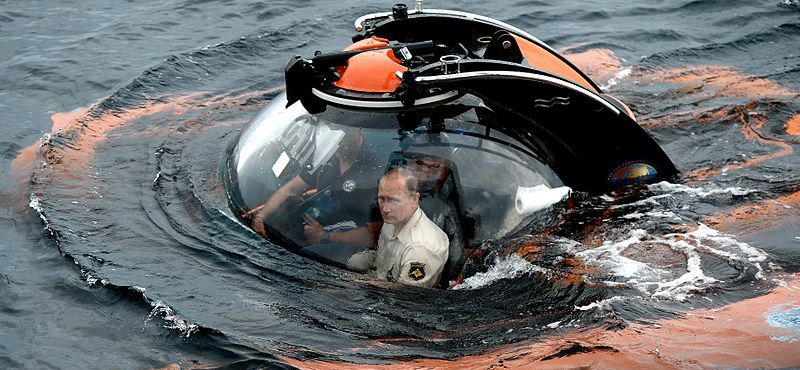
Today we will know about Vladimir Putin,the President of Russia. This billionaire was having a very hard early life like any ordinary poor child. He grew up in a communal apartment shared by three families in St.Peters-burg (then known as Leningrad). He shared the fifth floor walk up with his parents and two siblings.He used to hunt rats there… Yeah don’t be surprised that is true.I am going to focus more on his personal life in this biography rather than his political career,as you can easily find it anywhere about that.I have also added some unknown facts about him,which might you don’t know.
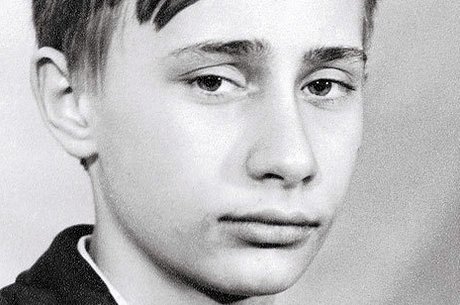
“I come from an ordinary family, and this is how I lived for a long time, nearly my whole life. I lived as an average, normal person and I have always maintained that connection,” Vladimir Putin
Putin Biography
Tweet
- Date Of Birth :7 October, 1952
- Full Name : Vladimir Vladimirovich Putin
- Place Of Birth: Leningrad, Soviet Union
(now Saint Peters-burg, Russia) - Children : 2 Daughters; Maria
Katrina - Marriage: Lyudmila (Shkrebneva) Putin (July 28, 1983-2014, divorced)
- Education : Saint Peters-burg State University (LLB),Saint Peters-burg Mining Institute (PhD)
- Residence : Novo-Ogaryovo, Moscow, Russia
- Religion: Orthodox Christian
TIMELINE (1975 TILL 2019)
1975 – Joins the Committee for State Security (KGB). Is on the staff of the First Chief Directorate for Foreign Intelligence for the KGB, and is assigned to shadow foreign visitors.
1984 – Is selected to attend the Red Banner Institute of Intelligence, where he learns German and English.
1985 – Is assigned to counterintelligence duties in Dresden, [East] Germany. Reportedly monitors loyalty of Soviet diplomats.
1990 – Becomes assistant rector (dean) for international affairs at Leningrad State University. Reportedly monitors loyalty of students and shadows foreigners.
1997 – Putin is named deputy chief administrator of the Kremlin under President Boris Yeltsin.
1998 – Chief of the Federal Security Service (FSB).
1999 – Secretary of the Russian Security Council.
August 9, 1999 – Yeltsin appoints Putin as Prime Minister of Russia.
December 31, 1999 – Yeltsin steps down amid scandal and Putin becomes acting president. He grants Yeltsin immunity from prosecution.
March 26, 2000 – Is elected president of Russia.
May 24, 2002 – Putin and US President George W. Bush sign the Moscow Treaty on Strategic Offensive Reductions.
March 15, 2004 – Is re-elected after campaigning as an independent.
May 7, 2004 – Putin is sworn in for his second term.
April 27, 2005 – Becomes the first Russian leader to visit Israel.
October 4-5, 2005 – Visits British Prime Minister Tony Blair and announces increased cooperation between Russia and Britain to fight terrorism.
December 19, 2007 – Named Time magazine’s Person of the Year.
May 7, 2008 – Just two hours after his presidential swearing in, Medvedev names Putin as prime minister.
August 2008 – Russia engages in a military conflict with neighboring Georgia.
March 4, 2012 – Putin wins a third term as president, with just under 65% of the vote. Critics question the results amid complaints of voter fraud.
December 14, 2012 – US President Barack Obama signs the Magnitsky Act, a law that imposes travel and financial restrictions on individuals in Russia suspected of human rights violations.
December 28, 2012 – In response to the Magnitsky act, Putin signs into law a bill that effectively bans US citizens from adopting Russian children. The law also bans US-funded civic groups from operating in Russia.
June 6, 2013 – During an interview broadcast on state-run television, Putin and his wife, Lyudmila, announce that their marriage is over.
March 2014 – Putin sends troops into Crimea after Ukrainian President Viktor Yanukovych flees amid violent protests.
September 1, 2016 – During a Bloomberg News interview, Putin denies that the Russian government had any involvement in the hacking of Democratic National Committee emails.
July 7, 2017 – Meets Trump for the first time on the sidelines of the G20 summit in Hamburg, Germany.
December 6, 2017 – Announces he will run for re-election in 2018.
March 18, 2018 –Putin reportedly wins the election, with 76.7% of the vote, according to Russia’s Central Election Commission.
May 7, 2018 – Sworn in as president for another six years.
April 25, 2019 – North Korean Leader Kim Jong Un meets with Putin in Vladivostok.
July 3, 2019 – Putin signs a federal law suspending Russia’s participation in the Intermediate-Range Nuclear Forces (INF) Treaty
His Life
As i mentioned earlier Vladimir Vladimirovich Putin was born on 7 October 1952 in Leningrad, Soviet Union (now called Saint Peters-burg).He was the youngest of three children of Vladimir Spiridonovich Putin and Maria Ivanovna Putina . Vladimir Spiridonovich’s father was cook to Lenin.Well i hope you would know Lenin __ He was was a Russian revolutionary and political theorist. He served as head of government of Soviet Russia from 1917 to 1922 and of the Soviet Union from 1922 to 1924. Under his administration, Russia and then the wider Soviet Union became a one-party communist state governed by the Russian Communist Party. Putin’s birth was preceded by the death of two brothers, Viktor and Albert, born in the mid-1930s. Albert died in infancy and Viktor died of diphtheria during the Siege of Leningrad in World War II.Putin’s mother was a factory worker and his father was a conscript in the Soviet Navy, serving in the submarine fleet in the early 1930s. Early in World War II, his father served in the destruction battalion of the NKVD. Later, he was transferred to the regular army and was severely wounded in 1942. Putin’s maternal grandmother was killed by the German occupiers of Tver region in 1941, and his maternal uncles disappeared at the war front.On 1 September 1960, Putin started at School No. 193 at Baskov Lane, near his home. At age 12, he began to practice sambo and judo. He is a Judo black belt and national master of sports in Sambo. Putin studied German at Saint Peters-burg High School 281 and speaks German fluently.Putin studied Law at the Leningrad State University (now called Saint Peters-burg State University) in 1970 and graduated in 1975.His thesis was on “The Most Favored Nation Trading Principle in International Law”.While there, he was required to join the Communist Party of the Soviet Union and remained a member until December 1991.
CAREER
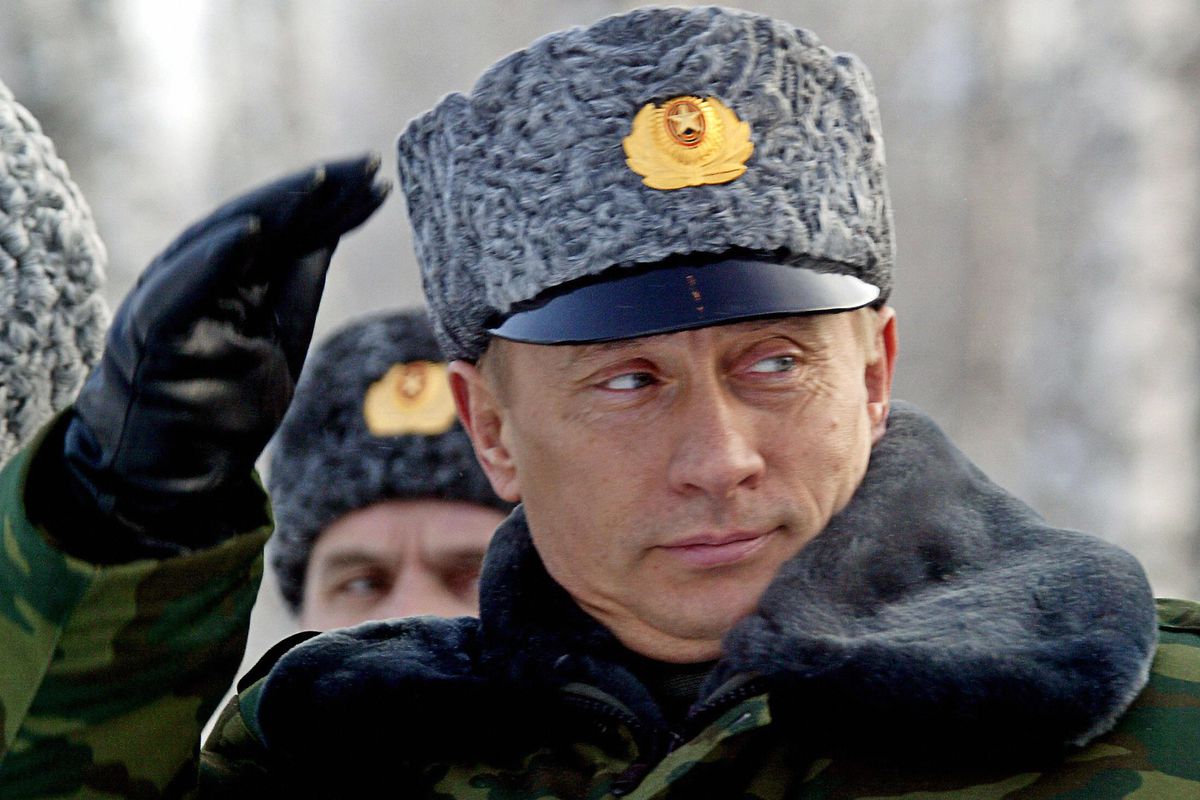
Putin was a KGB (Committee for State Security, was the main security and Spy agency for the Soviet Union from 1954 until its break-up in 1991) foreign intelligence officer for 16 years, rising to the rank of Lieutenant Colonel .He resigned in 1991 to enter politics in Saint Petersburg. Later he moved to Moscow in 1996 and joined President Boris Yeltsin’s (Soviet and Russian politician who served as the first President of the Russian Federation from 1991 to 1999) administration where he served as director of the FSB which is KGB’s successor agency, and then as prime minister. He also became Acting President on 31 December 1999 Chosen by Yeltsin himself, when he resigned because of the growing pressure.He served as President of Russia since 2012, previously holding the position from 2000 until 2008. In between his presidential terms, he was also the Prime Minister of Russia under his close associate Dmitry Medvedev.He won the March 2012 presidential election with 64% of the vote.Putin won the 2018 presidential election with more than 76% of the vote.His fourth term began on 7 May 2018.
FAMILY
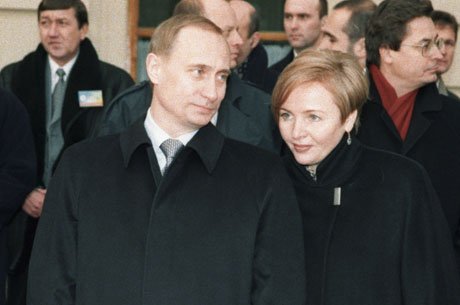
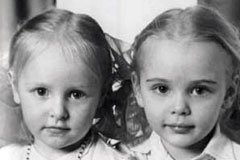
On 28 July 1983, Putin married Lyudmila Shkrebneva , and they lived together in East Germany from 1985 to 1990. They have two daughters, Mariya Putina, born 28 April 1985 in Leningrad, and Yekaterina Putina, born 31 August 1986 in Dresden, East Germany.On 6 June 2013, Putin announced that their marriage was over, and, on 1 April 2014, the Kremlin confirmed that the divorce had been finalized.
RESIDENCE
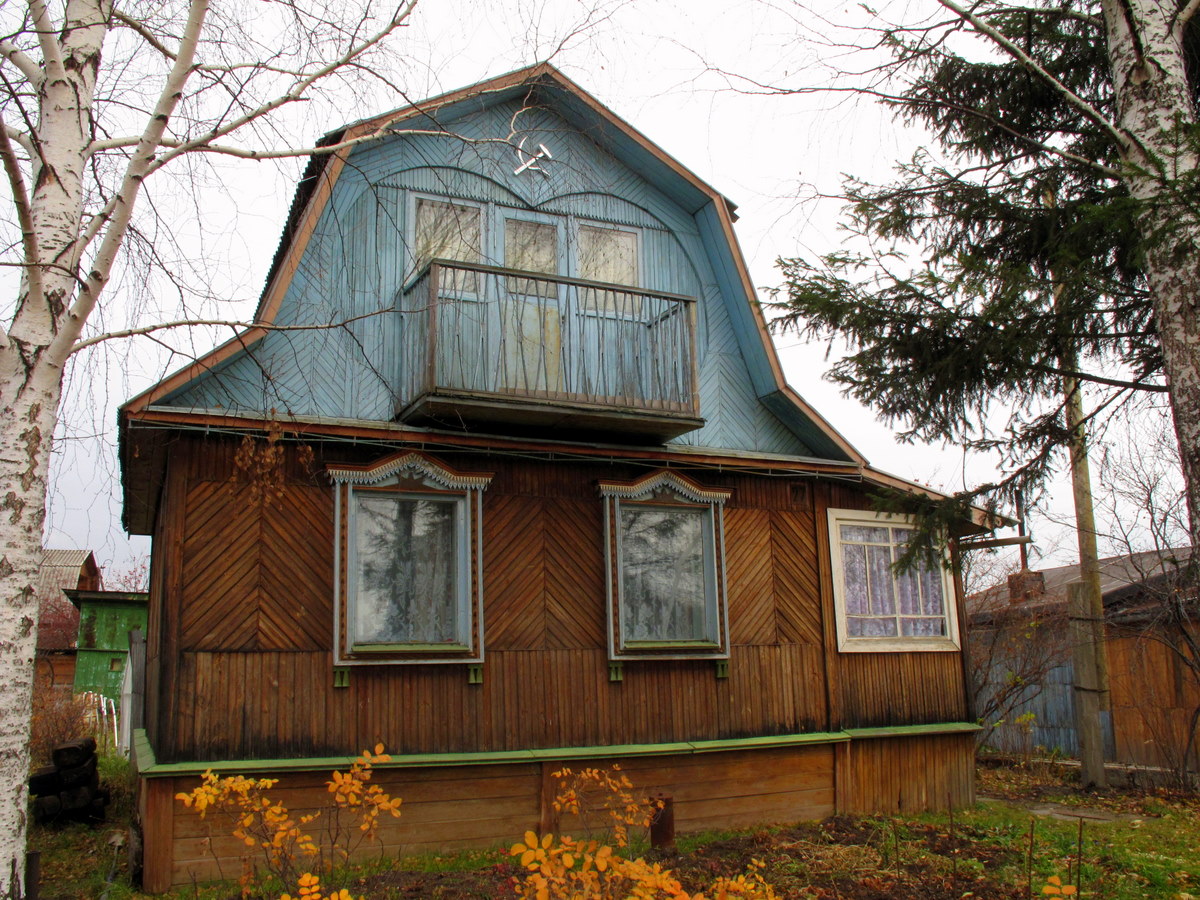
After Putin returned from his KGB service in Dresden, East Germany, he built a dacha in Solovyovka on the eastern shore of Lake Komsomolskoye on the Karelian Isthmus in Priozersky District of Leningrad Oblast, near St. Petersburg. After the dacha burned down in 1996, Putin built a new one identical to the original and was joined by a group of seven friends who built dachas nearby. In 1996, the group formally registered their fraternity as a co-operative society, calling it Ozero (“Lake”) and turning it into a gated community.
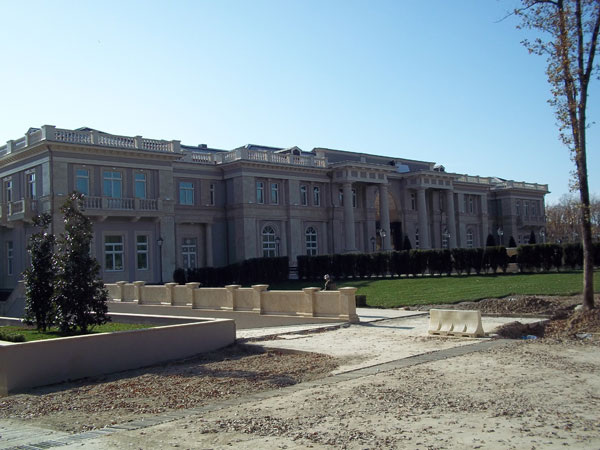
A massive Italianate-style mansion costing an alleged US$1 billion and dubbed “Putin’s Palace” is under construction near the Black Sea village of Praskoveevka. The mansion, built on government land and sporting 3 helipads, and a private road paid for from state funds and guarded by officials wearing uniforms of the official Kremlin guard service, is said to have been built for Putin’s private use. While Putin’s spokesman Dmitry Peskov said that “Putin has never had any relationship to this palace.”
As the president and prime-minister of Russian federation, Putin has lived in numerous official residences throughout his country. These residences include: the Moscow Kremlin, Novo-Ogaryovo in Moscow Oblast, the White House in Moscow, Gorki-9 near Moscow, Bocharov Ruchey in Sochi, Dolgiye Borody in Novgorod Oblast, and Riviera in Sochi.
In 2012, critics of President Vladimir Putin listed the ownership of 20 villas and palaces, nine of which were built during Putin’s 12 years in power.
WEALTH
During the elections of 2007, Putin’s wealth was approximately 3.7 million rubles (US$150,000) in bank accounts, a private 77.4-square-meter (833 sq ft) apartment in Saint Petersburg, and miscellaneous other assets. Putin’s reported 2006 income totaled 2 million rubles (approximately $80,000). In 2012, Putin reported an income of 3.6 million rubles ($113,000).
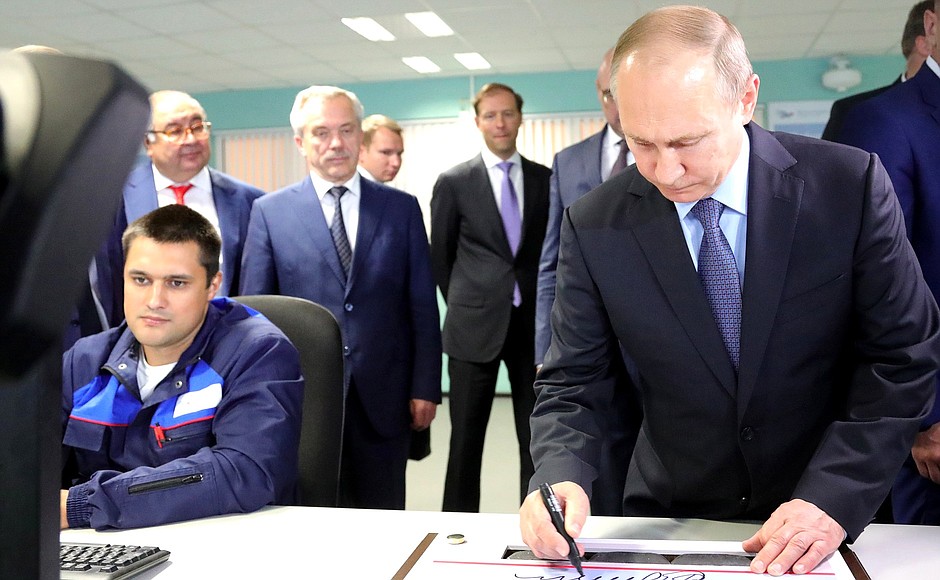
However, most outside observers believe that Putin’s wealth is far greater than he lets on. Many estimates are generally in the billions — in 2015, Bill Browder, a former fund manager in Russia and major critic of Putin, estimated the president’s net worth at $200 billion, a figure that would likely make him the richest person on Earth.
RELIGION
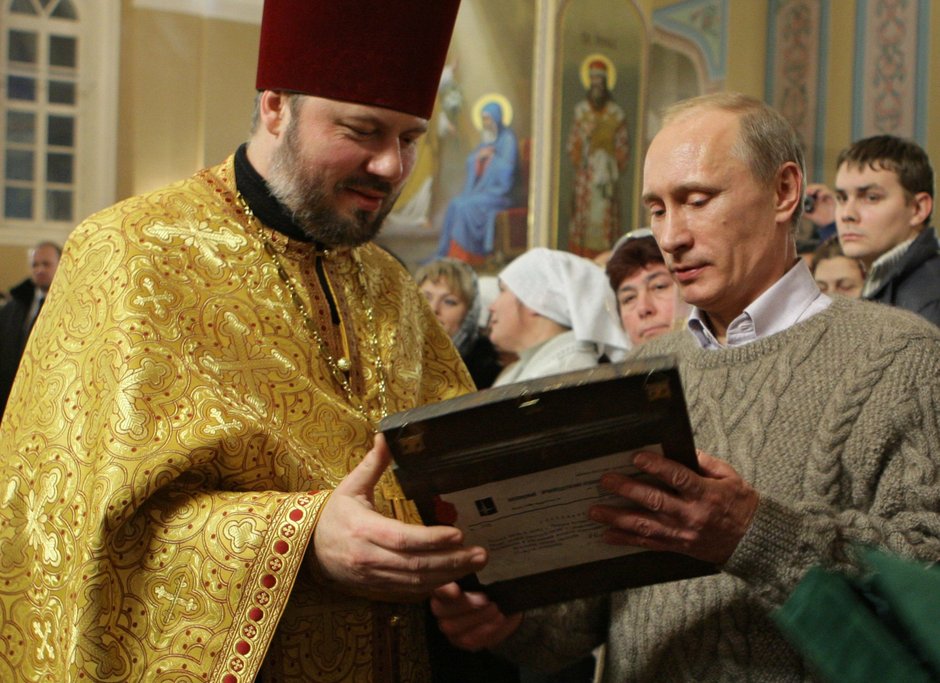
Vladimir Putin’s father was an atheist and his mother was an Orthodox Christian. Vladimir was baptized into the Orthodox Church as an infant secretly by his mother as the government of that time did not allowed any religion to be practiced.
In an interview with Russian journalists published in 2000, Putin explained the significance of his well-known Orthodox cross pendant:
In 1993, when I worked on the Leningrad City Council, I went to Israel as part of an official delegation. Mama gave me my baptismal cross to get it blessed at the Lord’s Tomb. I did as she said and then put the cross around my neck. I have never taken it off since.
In an interview with TIME magazine for their “Person of the Year” cover story in 2007, Putin was asked about his religion. Here’s how he responded:
TIME: One of the issues that is being discussed in our presidential election is the role of faith in government. One of the old stereotypes that Americans have about Russia, and certainly the Russia of the U.S.S.R., is that it was a godless country. You have talked about your own faith. What role does faith play in your own leadership and what role should faith play in government and in the public sphere?
PUTIN: First and foremost we should be governed by common sense. But common sense should be based on moral principles first. And it is not possible today to have morality separated from religious values. I will not expand, as I don’t want to impose my views on people who have different viewpoints.
TIME: Do you believe in a Supreme God?
PUTIN: Do you? … There are things I believe, which should not in my position, at least, be shared with the public at large for everybody’s consumption because that would look like self-advertising or a political striptease.
Stengel, “Putin Q&A: Full Transcript.” TIME Magazine. (2007)
In 2016, Putin made a half-day pilgrimage to Mount Athos, an important Orthodox monastery in Greece.
SPORTS
Vladimir Putin has embraced the sporting life. From flying with wild geese to fishing in icy Siberian waters to playing ice hockey, the Russian president’s athletic stunts are well-known, well-documented and well ridiculed.
Putin watches football, and supports FC Zenit Saint Petersburg, from his home city.He also has displayed an interest in ice hockey and bandy, the latter which in Russia often is called ‘Russian hockey’.Putin began training in sambo at the age of 14, before switching to judo, which he continues to practice. Putin won competitions in both sports in Leningrad (now Saint Petersburg). Putin was awarded 8th day of the black belt in 2012 and became the first Russian to have been awarded the eighth dan, joining a handful of judo fighters in the world who have achieved such status. Putin also practises karate.
POPULARITY
According to a June 2007 public opinion survey, Putin’s approval rating was 81%, the second highest of any leader in the world that year.In January 2013, at the time of 2011–2013 Russian protests, Putin’s approval rating fell to 62%, the lowest figure since 2000 and a ten-point drop over two years.By May 2014, following the annexation of Crimea, Putin’s approval rating had rebounded to 85.9%, a six-year high.After EU and U.S. sanctions against Russian officials as a result of the 2014 pro-Russian unrest in Ukraine, Putin’s approval rating reached 87 percent, according to a Levada Center survey published on 6 August 2014. In February 2015, based on new domestic polling, Putin was ranked the world’s most popular politician.In June 2015, Putin’s approval rating climbed to 89%, an all-time high.In 2016, the approval rating was 81%.
Observers see Putin’s high approval ratings as a consequence of significant improvements in living standards, and Russia’s reassertion of itself on the world scene during his presidency.
Major Political Incidents
Invasion into Crimea
Putin sent Russian troops into Crimea,i february 2014, a peninsula in the country’s northeast coast of the Black Sea. The peninsula had been part of Russia until Nikita Khrushchev, former Premier of the Soviet Union, gave it to Ukraine in 1954. Ukraine’s ambassador to the United Nations, Yuriy Sergeyev, claimed that approximately 16,000 troops invaded the territory, and Russia’s actions caught the attention of several European countries and the United States, who refused to accept the legitimacy of a referendum in which the majority of the Crimean population voted to secede from the Ukraine and reunite with Russia. Putin defended his actions, however, claiming that the troops sent into Ukraine were only meant to enhance Russia’s military defenses within the country—referring to Russia’s Black Sea Fleet, which has its headquarters in Crimea. He also vehemently denied accusations by other nations, particularly the United States, that Russia intended to engage Ukraine in war. He went on to claim that although he was granted permission from Russia’s upper house of Parliament to use force in Ukraine, he found it unnecessary. Putin also wrote off any speculation that there would be further incursion into Ukrainian territory, saying, “Such a measure would certainly be the very last resort.” The following day, it was announced that Putin had been nominated for the 2014 Nobel Peace Prize.
Syrian Airstrikes
In September 2015, Russia surprised the world by announcing it would begin strategic airstrikes in Syria. Despite government officials’ assertions that the military actions were intended to target the extremist Islamic State, which made significant advances in the region due to the power vacuum created by Syria’s ongoing civil war, Russia’s true motives were called into question, with many international analysts and government officials claiming that the airstrikes were in fact aimed at the rebel forces attempting to overthrow President Bashar al-Assad’s historically repressive regime. In late October 2017, Putin was personally involved in another alarming form of aerial warfare when he oversaw a late-night military drill that resulted in the launch of four ballistic missiles across the country. The drill came during a period of escalating tensions in the region, with Russian neighbor North Korea also drawing attention for its missile tests and threats to engage the U.S. in a destructive conflict.
See You Next Week.Thanks for being here.Please SHARE

 Alien Lite